Professional Summary
Broadband topological, nonlinear, and integrated photonics: I build photonic integrated circuits that harness topological properties across octave-spanning bandwidths to create turnkey, robust nonlinear devices with wafer-scale reproducibility. My work spans topological frequency combs, on-chip multi-timescale synchronization, broadband artificial gauge fields, and integrated harmonic generation — simultaneously advancing practical device engineering and probing fundamental topological physics and quantum optics.
I consider myself a hybrid of a physicist and an engineer, and a hybrid of an experimentalist and a theorist. Fundamental science is cool, and I try to benefit the real world with it.
Education
PhD Physics
University of Maryland, College Park
BS Physics
Nanjing University
Interests
I build photonic integrated circuits (PICs) that utilize the topological properties of light and matter to realize turnkey, robust nonlinear devices with wafer-scale reproducibility.
Topological photonics. The discoveries of the integer quantum Hall effect (1985 Nobel Prize), the fractional quantum Hall effect (1998 Nobel Prize), and the development of the modern framework of topological phases (2016 Nobel Prize) revealed that topology is not merely a mathematical abstraction, but a fundamental organizing principle of quantum matter. These phases exhibit hallmark properties such as quantized conductance and robust boundary modes that remain protected against disorder and imperfections.
By translating these concepts into photonics, we design optical structures whose bands inherit the same topological invariants that stabilize electronic edge states. As a result, these systems support topologically protected optical edge modes that guide light along boundaries without backscattering, even in the presence of fabrication imperfections. This robustness enables disorder-immune routing, synthetic gauge fields for photons, and exploration of new regimes in non-Hermitian and nonlinear topological physics.
Microresonator frequency combs. Optical frequency combs revolutionized precision measurement—a breakthrough recognized by the 2005 Nobel Prize—by providing an exquisitely stable ruler for measuring optical frequencies with unprecedented accuracy. Traditional combs, however, rely on large, complex femtosecond laser systems. In the past decade, a major scientific push has aimed to miniaturize this Nobel-Prize–winning capability onto chip-scale platforms.
Microresonator frequency combs, or microcombs, achieve this by confining continuous-wave laser light inside a high-Q cavity, where intense circulating fields drive Kerr nonlinearities and generate a series of equally spaced spectral lines. These chip-based combs can operate at microwave repetition rates, produce coherent solitons, and integrate directly with photonic circuits. Their compactness, stability, and CMOS compatibility position microcombs as powerful tools for next-generation precision metrology, telecommunications, and emerging nonlinear and quantum technologies.
Building on my PhD work with large-scale nonlinear photonic lattices, I am recently exploring their potential as a hardware platform for optical computing. I am also interested in light-matter interactions—specifically how the integration of atomic systems might overcome the inherent limitations of photonics alone to enable scalable quantum networking and computing.
These days, I work closely with talents from various backgrounds, including Dr. Mahmoud Jalali Mehrabad, Dr. Pavel Dolgirev, Dr. Supratik Sarkar, Dr. Shi Yuan Ma, and Dr. Gregory Moille. I have obtained valuave mentoring from Prof. Yanne Chembo, Prof. Kartik Srinivasan, and most importantly my advisor Prof. Mohammad Hafezi.
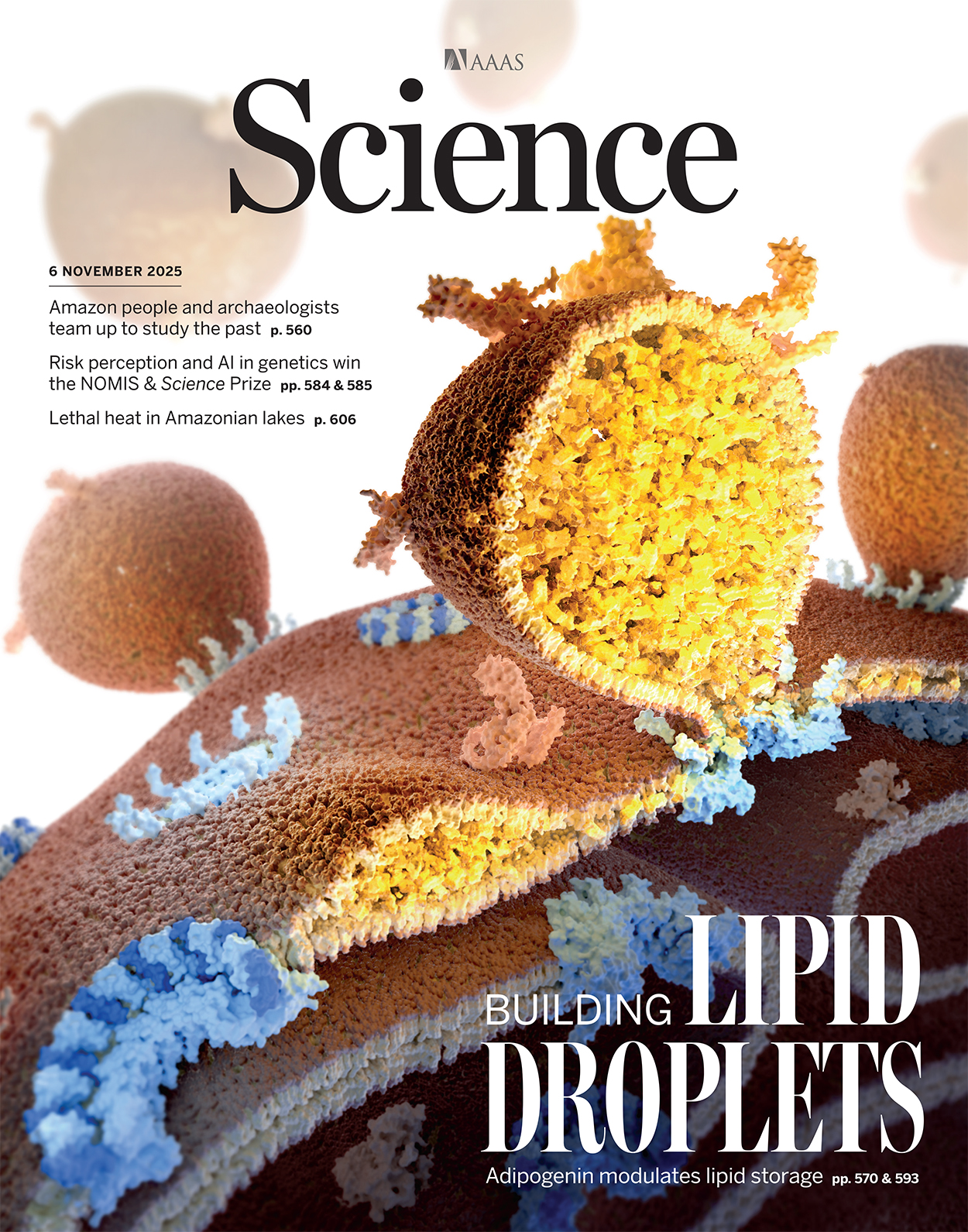
Multi-timescale frequency-phase matching for high-yield nonlinear photonics

On-chip multi-timescale spatiotemporal optical synchronization

Observation of topological frequency combs

Talk: Frequency comb realization of the integer quantum Hall model